
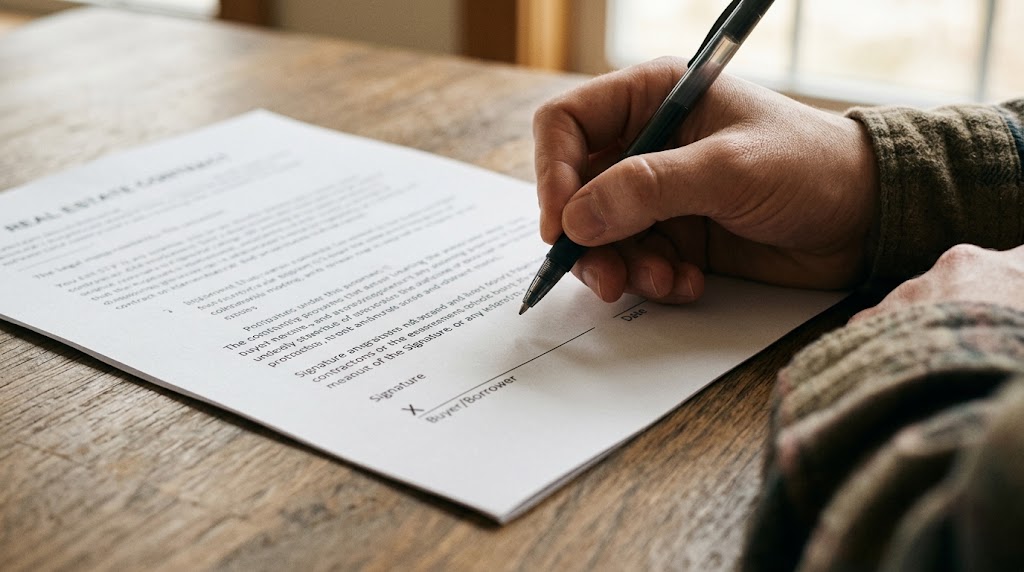
Most people read a real estate contract the way they read the terms and conditions on a new app: a quick scroll, a few initials, and a signature. But a Florida purchase contract isn’t a formality. The moment it’s signed, several clocks start running at once, and some of them are short.
At Chelsea & Company Realty, we believe you should never sign something you don’t understand. Here’s what actually happens, in plain English, so you can make confident decisions before your pen touches the page.
The short answer: Signing a Florida purchase contract creates a binding agreement and starts a set of deadlines, usually counted from the “Effective Date.” Those deadlines cover your deposit, your inspections, your financing and your closing. Your contract controls, so the dates and blanks you fill in matter more than the headline price.
First, the contract isn’t “signed” until it’s effective
In a back-and-forth negotiation, the date you sign is often not the date that counts. On the standard Florida Realtors/Florida Bar (FR/Bar) form, the Effective Date is the last date a party signs or initials the final offer or counteroffer. Nearly every deadline in the contract is counted from that date.
That’s why we write the Effective Date down for every client. If you and the other side disagree about what it is, you can disagree about every deadline after it. Florida Realtors advises parties who want to move forward after a missed deadline to acknowledge the Effective Date in writing.
Your deposit goes to work quickly
Your earnest money deposit is a sign of good faith, and it’s held by an escrow agent, not handed to the seller. On the FR/Bar form, the initial deposit is due within three days of the Effective Date unless the contract says otherwise.
It matters later, too. If a buyer defaults, the standard FR/Bar form lets the seller choose to keep the deposit as liquidated damages, which means the money you put down is the thing at risk.
The inspection period is your best exit, so use it
This is the part we most want every buyer to understand.
The FR/Bar “AS IS” contract gives the buyer a set window to inspect the property. During that window the buyer can cancel in their sole discretion, and the deposit is returned. The default on the form is 15 days from the Effective Date, but the number written into your contract is the one that counts, and agreements often use 10 to 15 days.
Two things people get wrong:
- There’s no automatic “cooling-off” period. According to Florida Realtors, after a seller accepts an offer, the buyer has no built-in three-day right to cancel. None of their forms provide one unless a specific provision is added.
- Missing the deadline changes the deal. If a buyer doesn’t inspect and report back in time, they can lose the right to ask the seller for repairs and the free exit that comes with the period.
Use every day. Schedule inspections in the first few days, so there’s time to review the reports and decide what to ask for, or whether to walk away, before the window closes.
“As Is” doesn’t mean “say nothing”
An “as is” contract means the seller isn’t agreeing to make repairs. It doesn’t mean the seller can stay quiet about problems they know about. Under Florida’s Johnson v. Davis decision, sellers must disclose known facts that materially affect a property’s value and aren’t readily observable. It’s also about condition, not title: the seller still has to deliver clear title at closing.
So as a buyer, you can negotiate for repairs or credits, but the seller can say no. And as a seller, “as is” isn’t a shield for hiding what you know.
Two disclosures you should have before you sign
Florida law puts some information in your hands at or before the contract is signed.
Flood disclosure. Since October 1, 2024, sellers of residential property must give buyers a flood disclosure at or before the contract is signed. It tells the buyer that homeowners’ insurance doesn’t cover flood damage, and it states whether the seller has filed a flood insurance claim or received federal assistance, such as FEMA aid, for flood damage to the property. In Central Florida, where rain and standing water are part of life, that’s worth reading carefully.
Property tax disclosure. Buyers should receive a summary stating that they should not rely on the seller’s current property taxes as the amount they’ll owe next year. A change of ownership or improvements can trigger a reassessment. The disclosure points you to the county property appraiser’s office, and we recommend you look up your own numbers.
Financing: the deadline that costs people money
If your purchase depends on a mortgage, your contract has a financing period. On the FR/Bar form, the buyer commonly has 30 days to obtain loan approval, but check your own contract.
Here’s the trap: if you can’t get approved and you don’t tell the seller in writing before the deadline, the contract can go forward as if you did. That puts your deposit at risk. And extending the closing date doesn’t automatically extend the financing period, so if you need more time for both, ask for both in writing.
Calendar days, weekends and the 5 p.m. question
Most FR/Bar deadlines are counted in calendar days, and a deadline that lands on a weekend or national holiday moves to the next day that isn’t one. Other forms, including the Florida Realtors CRSP contract, count business days, and say all time periods end at 5 p.m. local time. Knowing which form you’re on, and when each deadline actually lands, can save you from a very bad Friday.
A few special situations
- Military buyers: Florida law (Section 689.27) allows certain military members to terminate in specific circumstances, such as permanent change of station orders requiring a move of 35 miles or more, with proper written notice and a copy of the orders.
- Rented homes: If the property is leased, the seller has additional delivery obligations, including lease copies and a written disclosure within five days of the Effective Date.
Before you sign: a five-question check
- What is the Effective Date, and have we written it down?
- When is my deposit due, and who is holding it?
- How many days is my inspection period, and when does it end?
- What is my financing deadline, and how do I tell the seller in writing if I need out?
- Have I received the flood and property tax disclosures?
If any answer is “I’m not sure,” that’s the moment to pause and ask. It’s your money, your home and your decision.
Let’s talk it through, one conversation at a time
We’d rather you ask a hundred questions before you sign than one after. If you’re thinking about buying or selling in Central Florida, reach out to Chelsea & Company Realty for a no-pressure conversation about what your contract says and what your options are.
This article is general educational information, not legal advice. Contracts and Florida law change, and every situation is different. For advice about your specific contract, talk with a Florida real estate attorney. Chelsea Nevius is a Licensed Florida Broker; Chelsea & Company Realty.